How to Improve Water Pressure in Your Home
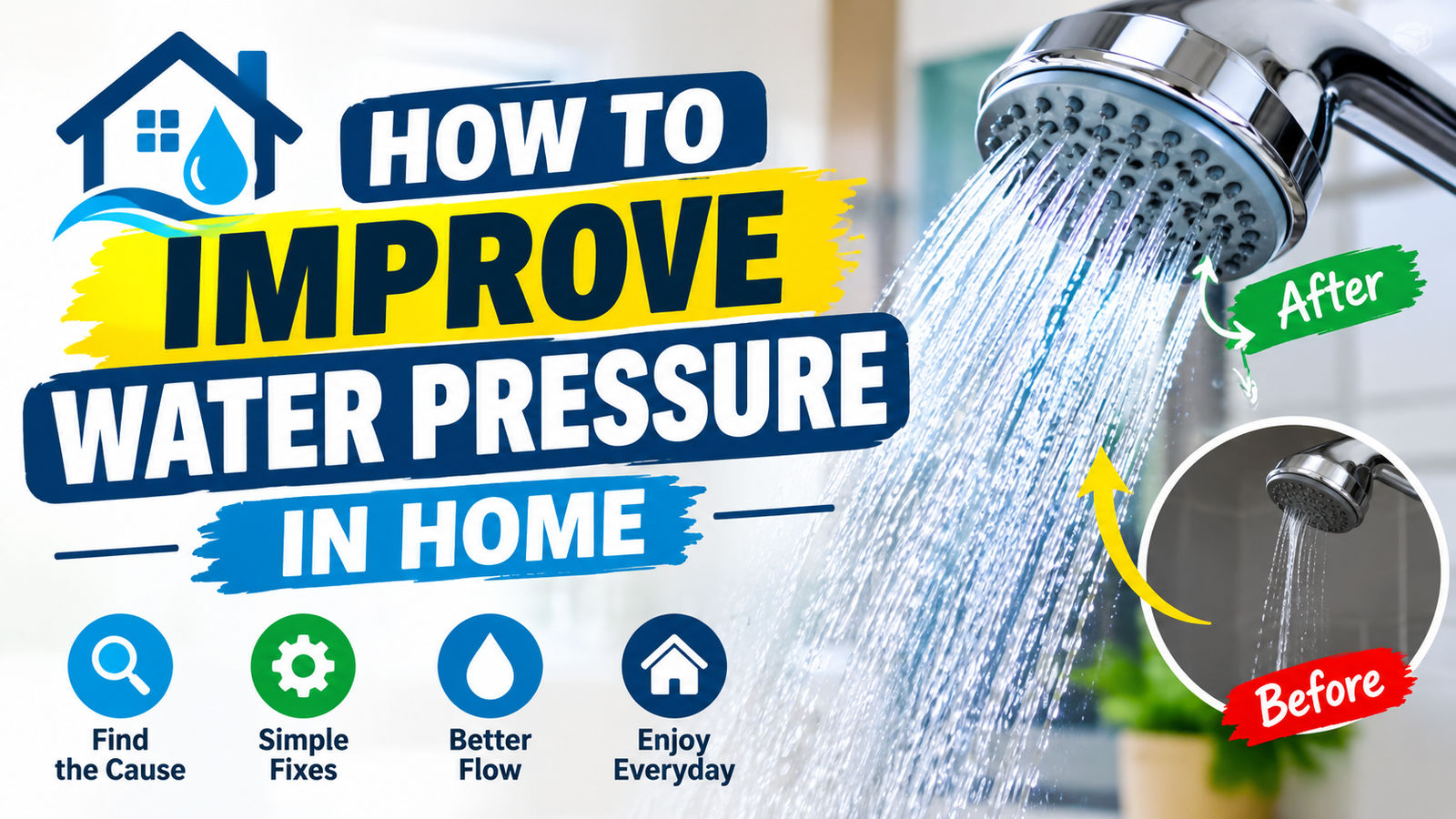
Low water pressure can make everyday household tasks frustrating. A weak shower, slowly filling toilet tank, or faucet that barely produces a steady stream may indicate a problem with your home’s plumbing system. Fortunately, many water-pressure problems can be identified and improved without replacing the entire plumbing system.
In this guide, we’ll explain how to improve water pressure in your home, what causes low pressure, and which solutions are worth trying first.
What Is Considered Low Water Pressure?
Water pressure is measured in pounds per square inch (PSI). In many residential plumbing systems, water pressure around 40–60 PSI provides comfortable performance for most household fixtures.
If the pressure suddenly drops or certain fixtures have noticeably weaker flow than others, the problem may be caused by a clogged aerator, partially closed valve, leaking pipe, or another localized plumbing issue.
Before making major changes, it’s useful to determine whether the problem affects the entire house or only one fixture.
1. Check the Main Water Valve
One of the easiest things to check is your home’s main water shut-off valve.
This valve controls the water entering your property. If it is partially closed, it can restrict the amount of water flowing through your plumbing system.
Locate the main valve and make sure it is completely open. Depending on the valve type:
- A lever-style valve is generally open when the handle is parallel to the pipe.
- A wheel-style valve usually opens by turning it counterclockwise.
Don’t force a valve that is stuck. An old valve may need professional attention to avoid damaging the plumbing.
2. Clean Faucet Aerators and Showerheads
If low pressure occurs at only one faucet or shower, a clogged fixture is often a simple explanation.
Mineral deposits, dirt, rust, and sediment can accumulate inside aerators and showerheads, restricting water flow.
Remove the fixture and inspect the openings. You can clean removable parts with a suitable descaling solution or vinegar, depending on the fixture manufacturer’s instructions.
After cleaning, rinse the component thoroughly and reinstall it.
Tip: If water pressure is normal at other fixtures but weak at one faucet, start here before investigating the entire plumbing system.
3. Check for Leaks
A plumbing leak can reduce the amount of water available at your fixtures. Even a relatively small leak can become a significant problem if it continues for a long time.
Look for:
- Damp spots under sinks
- Water stains on ceilings or walls
- Constantly running toilets
- Wet areas around pipes
- Unexplained increases in your water bill
- Water sounds when no fixtures are being used
If you suspect a hidden pipe leak, contact a qualified plumber. Repairing the leak may restore normal pressure while also preventing structural damage and water waste.
4. Inspect the Pressure Regulator
Some homes use a water pressure regulator to control incoming water pressure. If the regulator becomes worn or malfunctions, household water pressure can become unusually low.
A pressure regulator is usually installed near the point where the main water line enters the home.
If you have a regulator and the pressure throughout the house is consistently low, have a plumber test it. Depending on its condition, it may be possible to adjust it or it may need replacement.
Avoid increasing the pressure beyond the safe range recommended for your plumbing system.
5. Test Your Water Pressure
A simple pressure gauge can help determine whether your home’s water pressure is actually low.
You can attach a suitable pressure gauge to an outdoor hose connection or another compatible connection. Take a reading when water is not being used.
If the reading is significantly below the pressure your home normally requires, the issue may be related to the incoming water supply, pressure regulator, plumbing restrictions, or another component.
Testing pressure at different locations can also help determine whether the problem is localized.
6. Check Your Pipes for Corrosion or Mineral Buildup
Older plumbing systems can develop internal restrictions caused by corrosion, mineral deposits, or sediment.
This is particularly common with certain older metal pipes. Over time, the internal opening of a pipe can become narrower, reducing water flow even when the home’s incoming pressure is adequate.
If several fixtures have poor flow and the plumbing is old, replacing affected sections of pipe may provide a more permanent solution.
Because pipe replacement can involve opening walls or floors, it’s generally best to have a professional inspect the system first.
7. Consider a Water Pressure Booster Pump
If the incoming water supply doesn’t provide enough pressure, a water pressure booster pump may be an option.
A booster pump increases water pressure and can be useful in homes where:
- The municipal supply pressure is consistently low.
- The home is located at a higher elevation.
- Multiple fixtures need to operate simultaneously.
- The building has several floors.
The correct pump depends on the home’s plumbing configuration, water demand, and existing pressure. Installing an incorrectly sized pump can create additional plumbing problems, so professional assessment is recommended.
8. Check the Water Softener and Filtration System
Water treatment equipment can sometimes restrict flow when filters become clogged or components malfunction.
If your home has a:
- Water softener
- Whole-house filter
- Reverse-osmosis system
- Sediment filter
check the manufacturer’s recommended maintenance schedule.
A clogged filter can reduce flow to fixtures downstream of the equipment. Replacing the filter or servicing the system may improve performance.
How to Improve Home Insulation
9. Look at Your Plumbing Layout
Sometimes the issue isn’t a single faulty component but the design of the plumbing system.
Long pipe runs, undersized pipes, excessive bends, and multiple fixtures operating at the same time can contribute to reduced flow.
For example, you may notice that the shower becomes weaker when someone turns on a kitchen faucet or flushes a toilet.
A plumber can evaluate the pipe sizes and layout to determine whether the plumbing system itself is restricting flow.
10. Reduce Simultaneous Water Use
If your water pressure is acceptable when only one fixture is operating but drops when several are used simultaneously, your system may simply have limited flow capacity.
Try avoiding combinations such as:
- Shower + washing machine
- Shower + dishwasher
- Multiple showers at the same time
- Outdoor irrigation + indoor showers
This won’t increase the actual pressure, but it can make the available water supply feel more consistent.
When Should You Call a Plumber?
Some water-pressure problems are easy to fix, while others require professional diagnosis.
Contact a plumber if:
- Pressure suddenly drops throughout the house.
- You suspect a hidden leak.
- Your pipes are old or heavily corroded.
- The pressure regulator appears damaged.
- A booster pump is needed.
- Water pressure is extremely high or extremely low.
- Pressure problems continue after basic troubleshooting.
A professional can test the system, identify restrictions, and recommend a solution without unnecessarily replacing plumbing components.
How to Improve Home Security With Better Locks
Final Thoughts
Improving water pressure in your home doesn’t always require expensive plumbing work. Start by checking the main water valve, faucet aerators, showerheads, filters, and possible leaks. If the entire house has consistently low pressure, testing the system and inspecting the pressure regulator or incoming water supply can help identify the underlying cause.
For persistent problems, a professional plumbing inspection can determine whether you need a regulator adjustment, pipe repair, filtration-system service, or a water-pressure booster pump.
The key is to identify the cause before trying to increase the pressure. A targeted repair is usually safer, more effective, and more affordable than simply adding equipment.