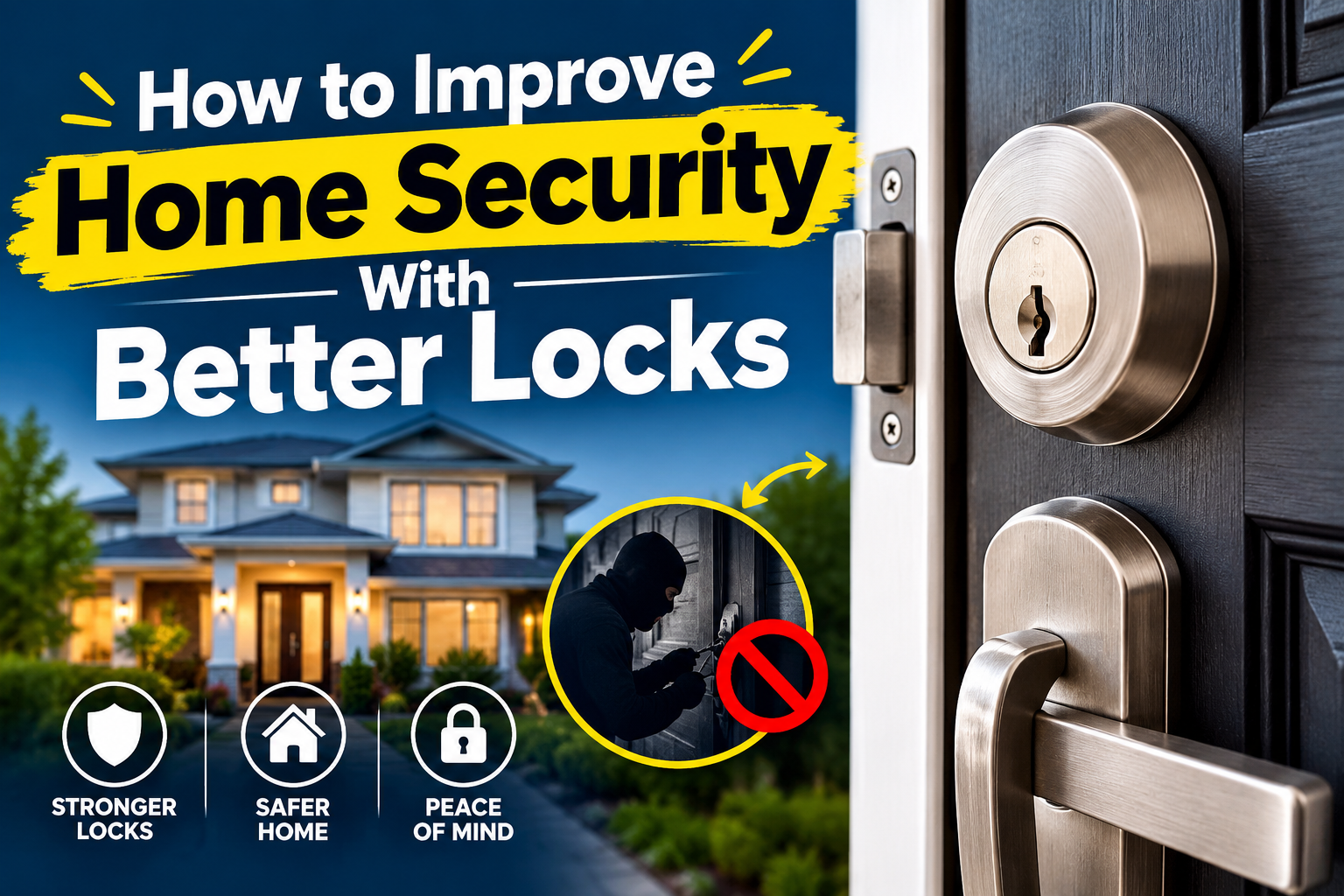
How to Improve Home Security With Better Locks
Your home should be a place where you feel safe and protected. While security cameras, alarms, and smart-home technology can all help protect your property, high-quality locks remain one of the most important parts of home security. A strong locking system can make it significantly harder for an intruder to gain unauthorized access.
If your locks are old, damaged, poorly installed, or easy to bypass, upgrading them can be a simple but effective way to improve your home’s security. In this guide, we’ll explain how to choose better locks and what other steps you can take to make your doors more secure.
1. Start by Inspecting Your Existing Locks
Before buying new locks, take a close look at the ones you already have. Check your front door, back door, garage entry, side doors, and other exterior entrances.
Look for signs of:
- Rust or corrosion
- Loose screws or hardware
- Difficulty turning the key
- A loose or damaged lock cylinder
- A weak or damaged door frame
- Locks that are several years old
- Doors that do not close or latch properly
A high-quality lock cannot provide much protection if the door, frame, or surrounding hardware is weak.
2. Upgrade to High-Quality Deadbolts
A deadbolt is one of the most important locks for an exterior residential door. Unlike a spring-latch lock, a deadbolt extends into the door frame and provides an additional layer of physical security.
When choosing a deadbolt, look for a reputable product designed for residential security and installed correctly. A quality deadbolt should have a sturdy bolt, a strong cylinder, and durable internal components.
For exterior doors, avoid relying only on a basic knob or handle lock. Combining a suitable deadbolt with a strong door and frame can provide substantially better protection.
3. Strengthen the Door Frame
Homeowners often focus on the lock while overlooking the door frame. However, the frame and strike area are critical parts of the overall security system.
A strong lock may still provide limited protection if the strike plate is attached to weak material.
Consider installing a heavy-duty strike plate with long screws that properly secure it to the structural portion of the frame. Make sure the door frame itself is in good condition and does not have cracks, damage, or excessive movement.
4. Consider Smart Locks
Smart locks are another option for homeowners who want greater convenience and additional control over access.
Depending on the model, smart locks may allow you to:
- Lock or unlock your door using a smartphone
- Create temporary access codes
- Give different people individual entry codes
- Monitor certain access activity
- Lock the door automatically after a set period
However, convenience should not replace physical security. Choose a smart lock from a reputable manufacturer, keep its software updated, use strong account credentials, and make sure the underlying door hardware is secure.
5. Use High-Security Lock Cylinders
Not all lock cylinders offer the same level of resistance to common forms of unauthorized entry. Some higher-security cylinders are designed with additional features intended to make unauthorized key duplication or manipulation more difficult.
When upgrading your locks, ask a qualified locksmith about options appropriate for your particular doors and security needs.
It is also important to consider who has copies of your keys. If you have recently moved into a home, lost keys, or are unsure how many copies exist, rekeying or replacing the locks can give you better control over who has access.
6. Don’t Forget Sliding Doors
Sliding glass doors can require special attention because their locking mechanisms can differ from those used on traditional hinged doors.
Make sure the primary lock works correctly and that the door closes securely. Depending on the door design, an additional professionally installed security device may provide another layer of protection.
Never use a makeshift object that could create an emergency escape problem. Any additional security measure should still allow occupants to exit safely when necessary.
7. Secure Garage and Secondary Entrances
Your front door isn’t the only entrance that needs protection. Garage doors, basement doors, side entrances, and other less-visible access points can also affect your home’s overall security.
Review every exterior entrance and ask:
- Does the door close securely?
- Is the lock functioning correctly?
- Is the frame strong?
- Can the door be opened easily from outside?
- Are spare keys properly controlled?
Improving weaker entrances can prevent them from becoming the easiest point of access.
8. Keep Keys Under Control
Even the strongest lock cannot protect your home if unauthorized people have a working key.
Avoid hiding spare keys in obvious outdoor locations such as under doormats, flowerpots, or nearby objects. If you need to provide access to family members, guests, or service providers, consider using a secure access system or a smart lock with temporary codes.
If a key has been lost and you cannot determine who might find it, consider having the lock rekeyed or replaced.
9. Maintain Your Locks
Locks need maintenance just like other parts of your home.
Periodically check that:
- Screws are tight
- The deadbolt moves smoothly
- The door aligns correctly
- The strike plate remains secure
- The key or access mechanism works properly
- There is no visible damage or corrosion
If a lock suddenly becomes difficult to operate, don’t ignore the problem. A malfunctioning lock can leave your home less secure and may eventually fail when you need it.
10. Combine Better Locks With Other Security Measures
Better locks are an important foundation, but home security works best as a layered system.
Consider combining secure locks with:
- Exterior lighting
- Door and window sensors
- Security cameras
- A monitored alarm system
- Secure windows
- Strong doors and frames
- A video doorbell
- Good visibility around entrances
These measures can work together to deter unauthorized access, alert you to suspicious activity, and improve your ability to respond.
Final Thoughts
Improving home security does not always require a complete security-system overhaul. Upgrading outdated or weak locks can be one of the simplest places to start.
Begin by inspecting every exterior entrance, replacing damaged or outdated hardware, strengthening door frames, and choosing reputable locks that match your home’s needs. Remember that security is about more than the lock itself—the door, frame, strike plate, keys, and surrounding security measures all contribute to the overall level of protection.
By combining better locks with sensible security habits and additional protective measures, you can create a stronger and more reliable security system for your home.


Really solid list – the point about the strike plate and door frame is something most people skip. When we moved into our place last year, the previous owners had a decent deadbolt on the front door but the strike plate was held in with tiny half-inch screws, so we swapped in a heavy-duty one with 3-inch screws as you suggested. We also had all the exterior locks rekeyed the week we moved in, since there was no way of knowing how many key copies were floating around. The garage side door was our weakest spot too – fixed now, but worth checking on any house.