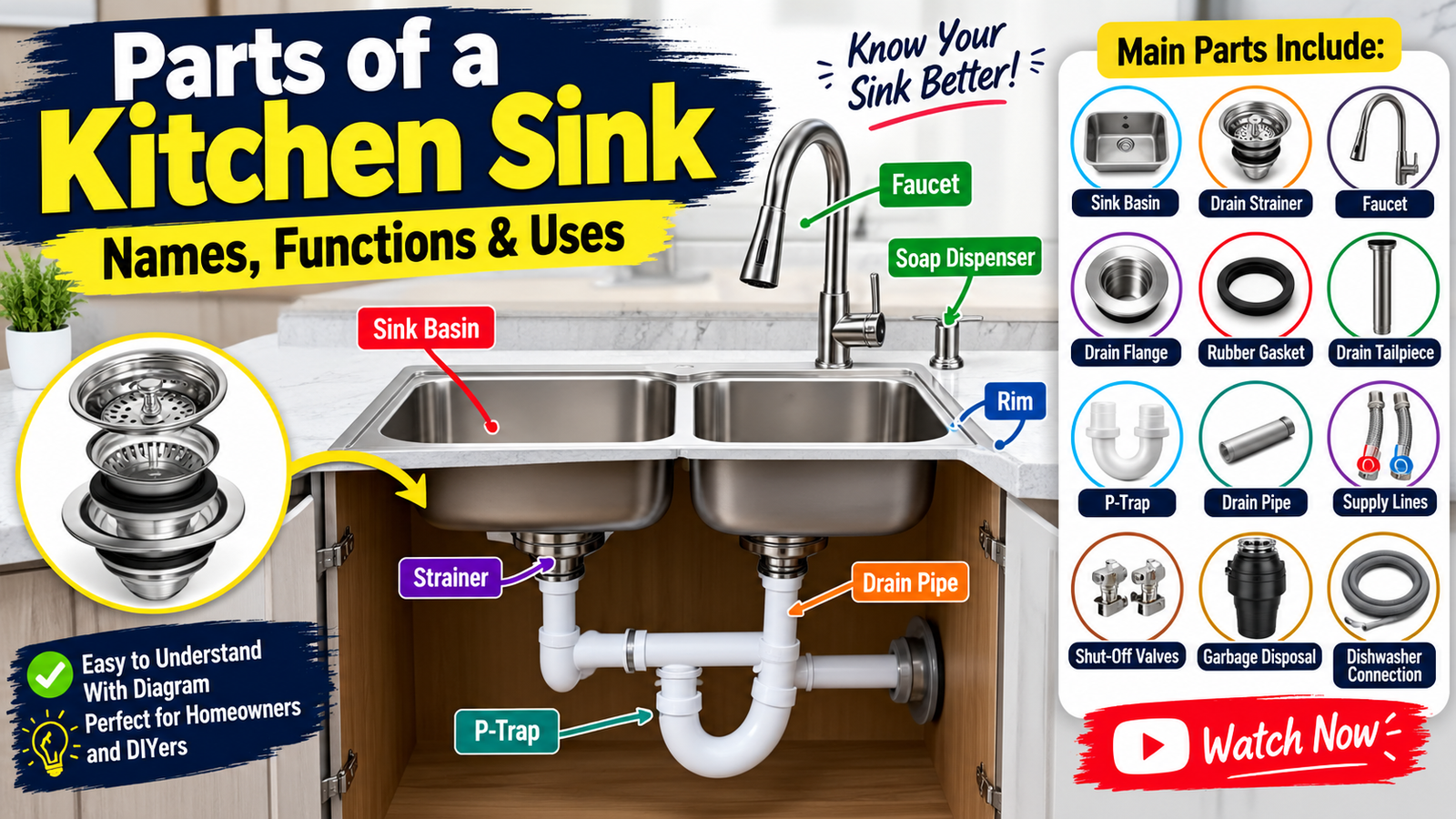
Parts of a Kitchen Sink: Names, Functions & Uses
The kitchen sink is one of the most frequently used fixtures in any home. From washing dishes and preparing food to cleaning vegetables and filling containers, a sink performs many everyday tasks. However, when something goes wrong, knowing the different kitchen sink parts can make troubleshooting and repairs much easier.
Whether you’re installing a new sink, replacing a damaged component, or simply learning how your plumbing works, understanding the main parts of a kitchen sink is useful.
In this guide, we’ll explain the most common kitchen sink parts, what each one does, and when it may need to be replaced.
What Are the Main Parts of a Kitchen Sink?
A typical kitchen sink system consists of two main groups:
- Sink and faucet components
- Drain and plumbing components
The exact parts depend on the type of sink, faucet, and plumbing system installed in your kitchen.
1. Sink Basin
The sink basin is the main bowl where water collects and where you wash dishes or food.
Kitchen sinks may have:
- Single basin
- Double basin
- Triple basin
- Large single workstation basin
The basin can be made from materials such as stainless steel, porcelain, granite composite, ceramic, or other engineered materials.
Common Problem
Scratches, stains, cracks, rust, or leaks around the basin can indicate that the sink needs maintenance or replacement.
2. Sink Rim
The sink rim is the outer edge surrounding the basin. Depending on the sink design, it may sit above the countertop or be installed underneath it.
The rim provides structural support and helps create a seal between the sink and countertop.
Different installation styles include:
- Top-mount sinks
- Undermount sinks
- Farmhouse sinks
- Integrated sinks
3. Sink Drain
The sink drain is the opening at the bottom of the basin where used water leaves the sink.
A drain assembly generally includes several smaller components that work together to prevent leaks and move wastewater into the plumbing system.
If water drains slowly, the drain opening or connected pipe may be clogged.
4. Drain Strainer
The drain strainer sits inside the sink drain opening. Its primary purpose is to catch food particles and other debris before they enter the drainpipe.
A typical strainer assembly can include:
- Strainer basket
- Rubber gasket
- Metal or plastic components
- Locknut
- Sealing materials
Cleaning the strainer regularly can help reduce drain blockages.
5. Sink Drain Flange
The drain flange is the visible portion of the drain assembly around the drain opening.
It connects the sink basin to the drain assembly below. A proper seal around the flange is important because a damaged or poorly sealed flange can cause water to leak underneath the sink.
6. Rubber Gasket
A rubber gasket creates a watertight seal between plumbing components.
Gaskets are commonly found around:
- Drain assemblies
- Sink strainers
- Faucet components
- Plumbing connections
Over time, rubber can become brittle, compressed, or damaged. A worn gasket may result in leaks.
7. Drain Tailpiece
The drain tailpiece is the short section of pipe that connects the sink drain assembly to the trap.
It is located underneath the sink and usually extends downward from the drain.
If the tailpiece becomes cracked, loose, or corroded, it may need to be repaired or replaced.
8. P-Trap
The P-trap is one of the most recognizable plumbing components underneath a kitchen sink. It has a curved shape that holds a small amount of water.
That water helps prevent sewer gases from traveling back through the drain and into the kitchen.
The P-trap can also collect debris, which is why it is sometimes involved when a sink becomes clogged.
9. Drainpipe
The drainpipe carries wastewater away from the sink and toward the home’s larger drainage system.
Several pipe sections may connect the sink to the wall drain, depending on the plumbing configuration.
A loose connection or damaged pipe can cause water to leak inside the cabinet.
Kitchen Faucet Parts
The faucet is another major part of the kitchen sink system. Modern faucets can have many components depending on their design.
10. Faucet Spout
The spout is the section of the faucet through which water flows into the sink.
Some kitchen faucets have a fixed spout, while others have a swiveling design that allows the water stream to move between different areas of the basin.
11. Faucet Handle
The handle controls the water flow and, depending on the faucet design, the water temperature.
Common configurations include:
- Single-handle faucets
- Two-handle faucets
- Pull-down faucets
- Pull-out faucets
A loose or difficult-to-turn handle can indicate a problem with the internal faucet components.
12. Faucet Aerator
The aerator is usually located at the end of the faucet spout.
It mixes air with the water stream and helps create a smoother flow. Mineral deposits can build up inside an aerator, potentially reducing water flow.
Removing and cleaning the aerator can sometimes restore normal water pressure.
13. Faucet Cartridge
Many modern faucets use a cartridge to control water flow and temperature.
A worn cartridge can cause problems such as:
- Dripping faucet
- Difficult handle movement
- Incorrect temperature control
- Water continuing to flow after the faucet is closed
The cartridge design varies between faucet manufacturers and models.
14. Supply Lines
Supply lines are flexible or rigid pipes that deliver hot and cold water from the home’s water supply to the faucet.
A typical two-handle faucet has separate hot and cold supply connections, while some single-handle faucets use a combined configuration.
Inspecting supply lines occasionally can help identify leaks before they cause significant cabinet or flooring damage.
15. Shut-Off Valves
Shut-off valves are located underneath the sink and control the water supply going to the faucet.
They allow you to turn off the water without shutting off the supply to the entire home.
Before repairing many faucet components, the appropriate shut-off valve should be closed.
Garbage Disposal Parts
Some kitchen sinks are connected to a garbage disposal, depending on the home’s plumbing setup.
16. Garbage Disposal
A garbage disposal is installed beneath one side of a sink and is designed to grind certain food waste into smaller particles so it can pass through the drainage system.
Not every kitchen sink has a garbage disposal.
17. Disposal Flange
The disposal flange connects the garbage disposal to the sink opening.
It forms an important connection between the sink basin and the disposal unit.
A damaged or improperly sealed flange can result in leaks around the sink opening.
18. Dishwasher Connection
In kitchens with a dishwasher, the dishwasher’s drain hose may connect to the sink’s drainage system or garbage disposal.
This connection allows wastewater from the dishwasher to enter the home’s drainage system.
Other Useful Kitchen Sink Parts
Depending on your sink design, you may also find several additional components.
Sink Overflow
Some sinks include an overflow opening or channel designed to help prevent water from spilling over the top of the basin.
Basket Strainer
A basket strainer catches food particles and debris while allowing water to flow through.
Drain Stopper
A drain stopper can temporarily block the drain opening, allowing water to collect inside the sink.
Soap Dispenser
Some kitchen sinks or countertops have a built-in soap dispenser installed near the faucet.
Spray Hose
Pull-down and pull-out faucets often include a flexible hose that allows the spray head to be moved around the sink.
Faucet Mounting Hardware
Mounting nuts, washers, and brackets secure the faucet to the sink or countertop.
Kitchen Sink Parts Diagram: Basic Layout
A simplified kitchen sink plumbing system generally looks like this:
Sink Basin → Drain Strainer → Drain Flange → Tailpiece → P-Trap → Drainpipe → Household Drain System
For the water supply:
Water Supply → Shut-Off Valves → Supply Lines → Faucet → Spout
Understanding this basic arrangement can make it easier to identify where a leak, clog, or flow problem may be occurring.
Common Kitchen Sink Problems and the Parts Involved
| Problem | Possible Part |
|---|---|
| Slow drainage | Drain strainer, P-trap, drainpipe |
| Water leaking under sink | Gasket, drain connection, supply line |
| Faucet dripping | Cartridge, valve, aerator |
| Low water flow | Aerator, supply line, shut-off valve |
| Sewer smell | P-trap or drainage system |
| Faucet moving at the base | Mounting hardware |
| Water around drain | Drain flange or gasket |
| Dishwasher drainage issue | Dishwasher drain connection |
Keep in mind that the exact cause of a plumbing problem can vary, and some issues require professional inspection.
How to Maintain Your Kitchen Sink Parts
Regular maintenance can help extend the life of your sink and plumbing components.
Clean the Drain Strainer Regularly
Remove food debris from the strainer instead of allowing it to enter the drain.
Check for Leaks
Occasionally inspect the pipes, supply lines, valves, and drain connections underneath the sink.
Clean the Faucet Aerator
If water flow becomes weaker, check whether mineral deposits have accumulated inside the aerator.
Avoid Pouring Grease Down the Drain
Cooking grease can accumulate inside plumbing and contribute to drainage problems.
Don’t Force Faucet Handles
If a handle becomes difficult to turn, investigate the cause instead of applying excessive force.
Final Thoughts
Understanding kitchen sink parts makes it easier to maintain your sink, identify common problems, and choose the correct replacement components. From the sink basin and drain strainer to the P-trap, faucet cartridge, supply lines, and shut-off valves, every component has an important role in keeping your kitchen plumbing working properly.
If you’re replacing a part, always check the sink or faucet’s manufacturer, model, measurements, and connection type before purchasing a replacement. For significant leaks, damaged plumbing, or complicated installations, consider getting help from a qualified plumber.




One Comment