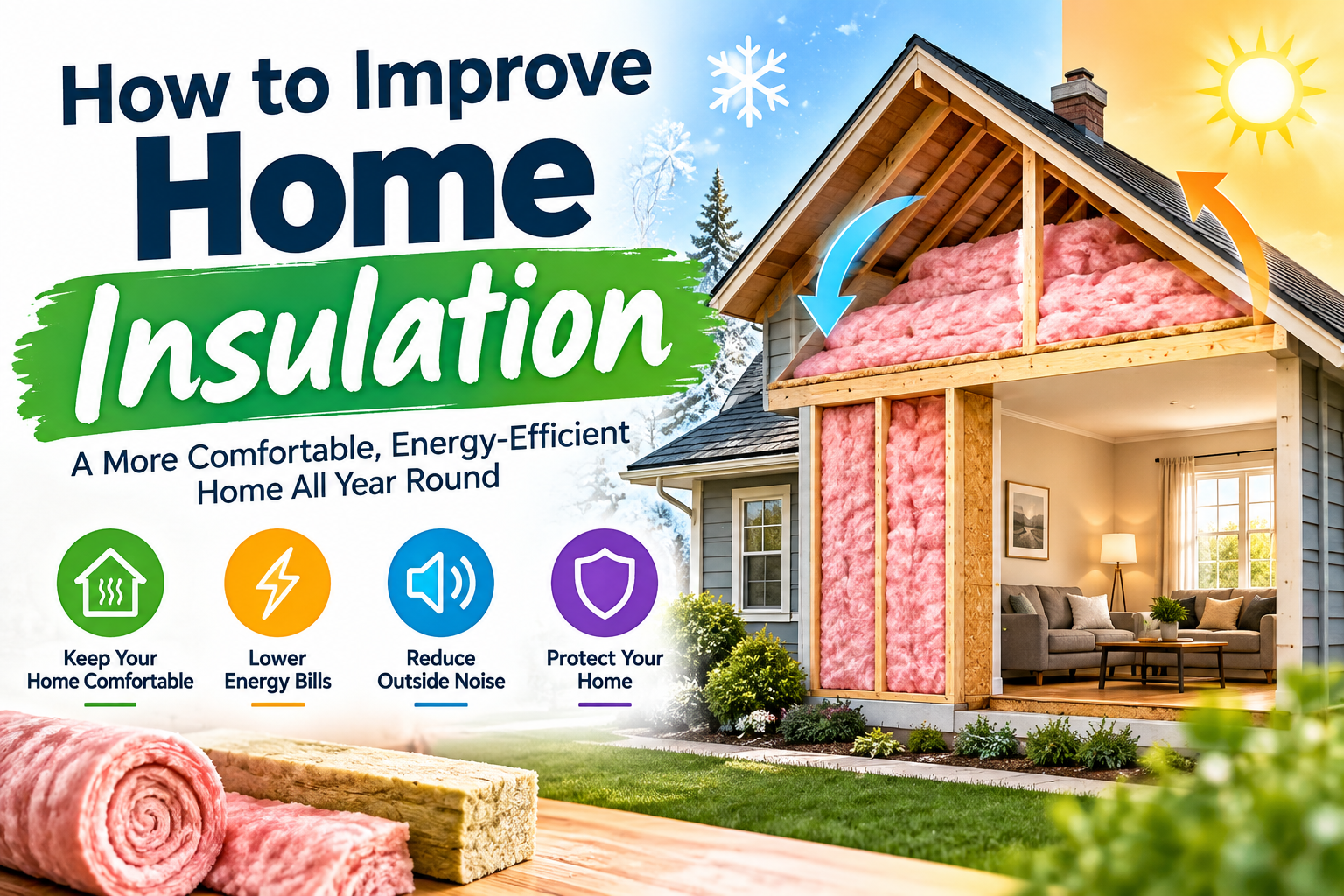
How to Improve Home Insulation: A Complete Guide to a More Comfortable and Energy-Efficient Home
A well-insulated home is more comfortable, quieter, and energy-efficient throughout the year. Good insulation helps keep warm air inside during colder months and prevents excessive heat from entering your home during hot weather. It can also reduce the workload on heating and cooling systems, potentially lowering energy bills.
If your home feels unusually hot in summer, cold in winter, or you notice that certain rooms are difficult to keep comfortable, poor insulation may be part of the problem.
The good news is that improving home insulation does not always require a major renovation. By identifying areas where heat is escaping or entering and choosing the right insulation solutions, you can make your home more comfortable and efficient.
What Is Home Insulation?
Home insulation is a material or system designed to slow the transfer of heat between your home’s interior and exterior.
Heat naturally moves from warmer areas toward cooler areas. In winter, heat can escape through the roof, walls, windows, doors, and floors. In summer, outdoor heat can enter through the same areas.
Insulation acts as a barrier that reduces this heat transfer.
Common insulation materials include:
- Fiberglass
- Mineral wool
- Cellulose
- Spray foam
- Rigid foam boards
- Reflective or radiant barriers
- Insulated panels
The best option depends on your climate, budget, home construction, and the area you want to insulate.
Why Is Proper Home Insulation Important?
Improving insulation can provide several benefits.
1. Better Indoor Comfort
Proper insulation helps maintain a more consistent indoor temperature. Instead of some rooms becoming extremely hot or cold, insulation helps create a more balanced environment throughout the house.
2. Lower Energy Consumption
When your home retains conditioned air more effectively, heating and cooling systems may not need to run as frequently. This can reduce energy consumption and potentially lower utility costs.
3. Reduced HVAC Workload
Poorly insulated homes can place additional strain on air conditioners, heaters, and heat pumps. Better insulation reduces the amount of heat entering or leaving the building, allowing HVAC equipment to operate more efficiently.
4. Improved Noise Control
Some insulation materials can also reduce the transmission of sound between rooms and from outside. This can make bedrooms, offices, and living spaces quieter.
5. Better Moisture Management
Certain insulation and air-sealing systems can help control unwanted air movement and moisture. However, insulation should be installed correctly because improperly handled moisture can contribute to mold or structural problems.
How to Improve Home Insulation
1. Start With the Attic or Roof
The roof is one of the most important areas to consider because heat can move through it easily.
During winter, warm indoor air can rise and escape through an inadequately insulated attic. During summer, solar heat can make the roof extremely hot, transferring heat into the rooms below.
Adding insulation to the attic floor or roof assembly can significantly improve thermal performance.
Before adding new insulation, check for:
- Thin or uneven insulation
- Exposed gaps
- Moisture damage
- Air leaks
- Poorly sealed openings
- Inadequate ventilation
If existing insulation is damaged or wet, determine the cause before simply covering it with new material.
2. Seal Air Leaks
Insulation alone is not always enough. Small gaps and cracks can allow conditioned air to escape and outdoor air to enter.
Look around areas such as:
- Window and door frames
- Electrical outlets
- Plumbing penetrations
- Pipe openings
- Attic access panels
- Baseboards
- Vents
- Utility penetrations
Use an appropriate caulk, sealant, weatherstripping, or expanding foam depending on the size and location of the opening.
Air sealing and insulation work best when considered together.
3. Insulate Exterior Walls
Exterior walls can be a major source of heat transfer, particularly in older homes with little or deteriorated insulation.
The best approach depends on the wall construction and whether you are renovating.
Possible solutions include:
- Blown-in insulation
- Batt insulation
- Spray foam
- Rigid insulation installed during renovation
- Exterior insulation added as part of a wall upgrade
Adding insulation to existing walls can be more complicated than insulating an attic, so professional assessment may be worthwhile before opening walls or drilling into them.
4. Upgrade Doors and Weatherstripping
A poorly sealed exterior door can allow noticeable amounts of conditioned air to escape.
Inspect the edges and bottom of exterior doors for visible gaps or drafts.
You can improve performance by installing:
- Door weatherstripping
- Door sweeps
- Threshold seals
- Properly fitted frames
If the door itself is old and poorly insulated, replacing it with a modern insulated exterior door may provide additional benefits.
5. Improve Window Insulation
Windows can contribute significantly to heat gain and heat loss, especially when they are old, single-glazed, or poorly sealed.
Depending on your budget, options include:
- Sealing gaps around window frames
- Installing weatherstripping
- Adding thermal curtains
- Using insulated window coverings
- Installing window films where appropriate
- Adding storm windows
- Replacing inefficient windows
Window replacement can be expensive, so improving air sealing and window coverings may be a practical first step.
6. Insulate Floors
If your home has floors above an unconditioned basement, crawl space, garage, or exterior area, heat can move through the floor.
Insulating the floor assembly can make rooms more comfortable, particularly when floors feel cold during winter.
Before installing insulation, inspect the area for moisture, pests, plumbing problems, and ventilation issues.
7. Consider Basement and Crawl-Space Insulation
Basements and crawl spaces can affect the temperature and humidity of the rest of the house.
Depending on the building design, insulation may be installed on:
- Basement walls
- Basement ceilings
- Crawl-space walls
- Floors above crawl spaces
The correct approach depends heavily on moisture conditions and local building practices. A moisture problem should be addressed before insulation is installed.
8. Use Radiant Barriers in Hot Climates
In homes exposed to intense sunlight, radiant barriers may help reduce radiant heat transfer, particularly in suitable attic applications.
Unlike traditional insulation, which primarily slows conductive heat transfer, radiant barriers are designed to reflect radiant heat.
They can be useful in some hot-climate situations but should not automatically be treated as a replacement for conventional insulation.
9. Insulate Hot Water Pipes
Home insulation is not limited to walls and ceilings.
Insulating hot-water pipes can reduce heat loss as water travels from the water heater to faucets. This can help improve hot-water efficiency and may reduce the amount of time you need to wait for hot water.
Pipe insulation is particularly useful for accessible hot-water lines in unconditioned areas.
10. Check Your Ductwork
If your home uses central heating or air conditioning, poorly insulated or leaky ducts can waste conditioned air.
Inspect accessible ductwork in areas such as attics, basements, and crawl spaces.
Look for:
- Loose connections
- Damaged insulation
- Visible gaps
- Condensation
- Poorly sealed joints
Duct sealing and insulation should be done appropriately for the duct system and location.
How to Improve Home Security With Better Locks
How to Know If Your Home Needs Better Insulation
Several signs can indicate inadequate insulation or air sealing.
You may notice:
- Large temperature differences between rooms
- High heating or cooling bills
- Rooms that heat up or cool down quickly
- Drafts around windows and doors
- Cold ceilings or walls during winter
- Excessive indoor heat during summer
- HVAC systems running for long periods
- Uncomfortable floors
- Visible gaps around building components
However, these problems can also result from inefficient HVAC equipment, duct leakage, solar exposure, moisture issues, or other building problems.
A professional energy assessment can help identify the actual source.
What Type of Insulation Should You Choose?
There is no single insulation material that is best for every home.
Fiberglass
Fiberglass is widely used and is available in batts and blown-in forms. It is relatively affordable and suitable for many applications when installed correctly.
Mineral Wool
Mineral wool is known for its thermal performance and resistance to fire. It can also provide useful sound-control properties.
Cellulose
Cellulose is commonly made from recycled paper fibers and can be installed as loose-fill or dense-pack insulation.
Spray Foam
Spray foam can provide both insulation and air-sealing benefits. However, installation requires careful attention to product specifications and application conditions.
Rigid Foam
Rigid foam boards can provide high thermal resistance in relatively thin assemblies and are often used in walls, foundations, roofs, and renovation projects.
Insulation Ratings: What Is R-Value?
R-value measures resistance to heat flow. Generally, a higher R-value means greater resistance to heat transfer.
However, the required insulation level depends on factors such as:
- Climate
- Building design
- Location
- Construction type
- Moisture conditions
- Local building codes
It is therefore better to follow insulation recommendations and building requirements appropriate for your specific climate rather than choosing a material based only on its advertised R-value.
Don’t Forget Ventilation
A well-insulated home still needs appropriate ventilation.
Insulation and air sealing reduce uncontrolled air movement, but homes require adequate ventilation to manage indoor pollutants, odors, humidity, and fresh-air requirements.
When improving insulation and air sealing, consider the home’s overall ventilation strategy rather than sealing every opening indiscriminately.
Should You Install Insulation Yourself?
Some smaller insulation projects can be suitable for experienced DIY homeowners. For example, basic weatherstripping or sealing small gaps may be relatively straightforward.
However, larger projects can involve:
- Electrical wiring
- Moisture control
- Ventilation
- Building-code requirements
- Roof assemblies
- Confined spaces
- Protective equipment
- Specialized installation techniques
Professional help is particularly valuable when insulating an attic, crawl space, exterior walls, or areas with existing moisture problems.
A Practical Home Insulation Checklist
Use this checklist when evaluating your home:
Attic and roof
- Check insulation depth and condition.
- Look for gaps and compressed areas.
- Inspect for moisture problems.
- Check for air leaks.
Walls
- Determine whether exterior walls are insulated.
- Look for drafts or unusually cold surfaces.
- Consider insulation during remodeling.
Windows and doors
- Check for drafts.
- Replace damaged weatherstripping.
- Seal gaps around frames.
- Consider insulated coverings or window upgrades.
Floors
- Inspect floors above unconditioned spaces.
- Check basement and crawl-space conditions.
- Address moisture before insulating.
HVAC and ducts
- Inspect accessible ductwork.
- Seal appropriate duct joints.
- Check duct insulation.
- Make sure HVAC equipment is properly maintained.
Final Thoughts
Improving home insulation is one of the most practical ways to create a more comfortable and energy-efficient living environment. The key is to look at the entire building rather than focusing on one product or one area.
Start by identifying where heat is entering or escaping. Attics, roofs, exterior walls, windows, doors, floors, and ductwork are common areas to investigate. Combine effective insulation with proper air sealing and moisture management for better overall results.
For larger projects, a professional energy assessment can help determine where improvements will have the greatest impact. With the right approach, better insulation can make your home more comfortable while helping reduce unnecessary energy use for years to come.




One Comment