Why Is My Kitchen Sink Leaking Underneath? Causes, Fixes & Prevention
A leaking kitchen sink can quickly turn from a small annoyance into a serious household problem. If you notice water dripping underneath your kitchen sink, the source could be something as simple as a loose connection—or it could indicate a damaged pipe, worn-out seal, or leaking drain component.
The good news is that many kitchen sink leaks underneath can be identified with a quick inspection. In this guide, we’ll explain the most common causes, how to find the exact source, possible DIY fixes, and when it’s better to call a professional plumber.
Why Is My Kitchen Sink Leaking Underneath?
There are several reasons why water may appear underneath your kitchen sink. The most common include:
- Loose drain connections
- Worn or damaged drain seals
- Leaking P-trap
- Cracked or damaged pipes
- Loose water supply connections
- Faucet or faucet-base leaks
- Garbage disposal leaks
- Dishwasher drain hose problems
- Corroded plumbing components
Before repairing anything, it’s important to determine where the water is actually coming from.
1. Loose Drain Pipe Connections
One of the most common reasons for a sink leaking underneath is a loose connection around the drainpipe.
The pipes underneath your sink are connected using nuts and seals. Over time, these connections can become loose because of vibration, movement, or normal wear.
How to Check
Dry the pipes completely with a towel. Then run some water into the sink and watch the connections carefully.
If water begins dripping from a connection, the fitting may need to be tightened or its seal may need replacement.
Tip: Avoid overtightening plastic plumbing fittings because excessive force can damage them.
2. A Damaged or Worn Drain Seal
Your sink drain has seals that help prevent water from escaping around the drain opening. If a seal becomes old, cracked, or improperly installed, water can leak into the cabinet underneath.
This type of leak may appear around the top of the drain assembly rather than directly from a pipe joint.
Possible Solution
The drain assembly may need to be removed and resealed. Depending on the type of sink and drain, this can involve replacing the gasket or using appropriate plumber’s putty or sealant.
If you’re not comfortable removing the drain, a plumber can handle the repair.
3. Leaking P-Trap
The P-trap is the curved section of pipe underneath your sink. It holds a small amount of water and helps prevent sewer gases from entering your home.
A P-trap can leak because of:
- Loose slip nuts
- Damaged washers
- Cracks
- Corrosion
- Misalignment
Inspect both ends of the P-trap while running water through the sink.
If the trap itself is cracked, tightening it won’t solve the problem. The damaged section generally needs to be replaced.
4. Cracked or Corroded Pipes
Older plumbing systems can develop corrosion or cracks. Metal pipes are particularly susceptible to corrosion over time.
A small crack may produce only a few drops initially, but the leak can become worse as the damage progresses.
Look for:
- Rust
- Green or white deposits
- Water stains
- Cracks
- Damp areas around pipe joints
If you find significant corrosion, replacing the affected plumbing component is usually more reliable than attempting a temporary repair.
5. Loose Water Supply Connection
Not every leak underneath a kitchen sink comes from the drain. Water can also come from the hot or cold water supply lines connected to your faucet.
These connections are usually located near the back wall of the cabinet.
To check them, dry the area and run the faucet. Carefully observe the supply connections while the water is running.
If water appears around the connection, it may need tightening or replacement.
Important
If a supply line is badly damaged or spraying water, turn off the water supply immediately. A pressurized supply leak can release considerably more water than a slow drain leak.
6. The Faucet May Be Leaking
Sometimes the pipes underneath the sink aren’t the actual problem.
Water can leak around the faucet base and travel down into the cabinet. This can make it look as though the plumbing underneath is leaking.
Easy Test
Dry the area around the faucet and sink deck. Then run water around the faucet base.
If water appears underneath the sink shortly afterward, the faucet gasket or another faucet component may need attention.
7. Garbage Disposal Leak
If your kitchen sink has a garbage disposal, it can also be the source of an underneath leak.
Common problem areas include:
- Disposal drain connections
- Dishwasher inlet connection
- Discharge pipe
- Disposal body or seals
If the disposal itself is cracked or leaking from its internal housing, replacement may be necessary rather than simply tightening a connection.
8. Dishwasher Drain Hose Problem
If your dishwasher drains into the kitchen sink plumbing, its drain hose can sometimes cause water to appear underneath the sink.
Check the hose for:
- Cracks
- Loose clamps
- Poor connections
- Kinks
- Signs of water around the connection
Run the dishwasher or drain cycle while observing the hose connection if you need to identify an intermittent leak.
How to Find Where the Kitchen Sink Is Leaking
Finding the exact source is the first step toward fixing the problem.
Follow these steps:
Step 1: Empty the Cabinet
Remove cleaning products and other items from underneath the sink so you can see the plumbing clearly.
Step 2: Dry Everything
Use a towel to completely dry the pipes, cabinet floor, and surrounding area.
Step 3: Check the Faucet
Run the faucet and look for water around the faucet base and supply connections.
Step 4: Fill the Sink
Fill the sink partially with water and then release the drain.
Watch the drain assembly and P-trap while the water flows.
Step 5: Use a Paper Towel
Place a dry paper towel around individual pipe connections. Even a small leak will usually leave a visible wet spot.
Step 6: Check Nearby Appliances
If you have a dishwasher or garbage disposal, inspect their connections as well.
Can You Fix a Kitchen Sink Leak Yourself?
Some minor leaks can be handled as a DIY repair if you are comfortable working with basic plumbing components.
For example, you may be able to fix:
- A slightly loose connection
- A worn washer
- A leaking P-trap
- A loose dishwasher hose clamp
However, more complicated problems may require professional help.
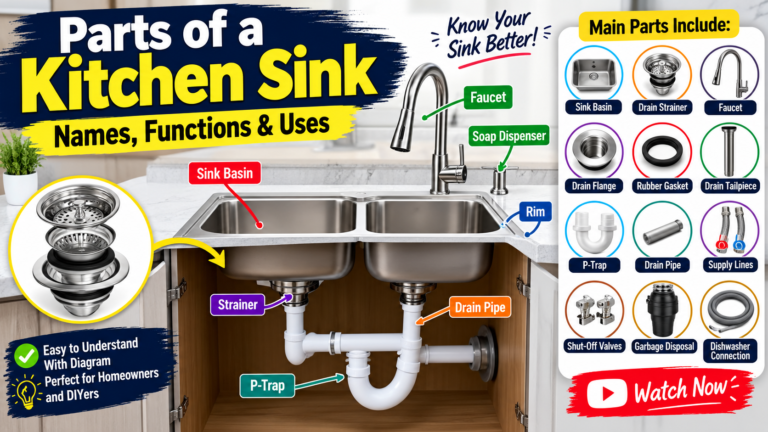
Parts of a Kitchen Sink: Names, Functions & Uses
Consider calling a plumber if you find:
- A major pipe crack
- Significant corrosion
- A leak inside the wall or cabinet structure
- A persistent leak after replacing seals
- A damaged water supply line
- Water damage to the cabinet or flooring
What Should You Do Immediately If Your Sink Is Leaking?
If the leak is substantial, don’t wait for it to get worse.
First, stop using the sink.
If water is coming from a pressurized supply connection, turn off the appropriate shutoff valve underneath the sink. If you cannot stop the leak locally, you may need to shut off the home’s main water supply.
Then remove standing water from the cabinet and dry the affected area to minimize water damage.
How to Prevent Kitchen Sink Leaks
Regular inspection can help catch small problems before they become expensive repairs.
Check Connections Regularly
Look underneath your sink every few weeks for moisture, stains, or corrosion.
Don’t Store Heavy Items Against Pipes
Cleaning supplies and other objects can accidentally put pressure on plumbing connections.
Avoid Chemical Drain Cleaners When Possible
Harsh chemical drain cleaners can damage certain plumbing components and create safety hazards if used improperly.
Fix Small Leaks Quickly
A few drops of water may not seem serious, but prolonged moisture can damage:
- Cabinet flooring
- Wood panels
- Flooring underneath
- Stored items
- Nearby walls
Frequently Asked Questions
Why is my kitchen sink leaking underneath but only when I run water?
This usually suggests a problem with the drain system, such as a loose drain connection, damaged seal, P-trap, or another drain component. Check the plumbing while water is actively draining.
Why is there water under my sink but no visible leak?
Water may be traveling from the faucet, supply line, dishwasher hose, or another connection before collecting at the bottom of the cabinet. Dry everything and use paper towels to trace the first wet point.
Can I tighten a leaking pipe under my sink?
If the leak is coming from a loose connection, gently tightening the fitting may help. Avoid excessive force, especially with plastic fittings, because overtightening can cause damage.
How do I know if my P-trap is leaking?
Dry the P-trap completely, then run water through the sink. Watch the curved pipe and its connections for fresh drops of water.
When should I call a plumber?
Call a professional if the leak is severe, involves a pressurized water line, comes from inside a wall or cabinet structure, involves significant corrosion, or continues after a basic repair.
Final Thoughts
If you’re wondering “why is my kitchen sink leaking underneath?”, the most likely causes include a loose connection, worn seal, leaking P-trap, damaged pipe, faucet problem, or appliance connection.
The best approach is to identify the exact source before attempting a repair. Dry the area, run water through the sink, and carefully inspect each connection. Minor plumbing leaks may be relatively simple to repair, while major or persistent leaks are better handled by a qualified professional.
Taking action early can help prevent a small kitchen sink leak from turning into expensive cabinet, flooring, or water damage.