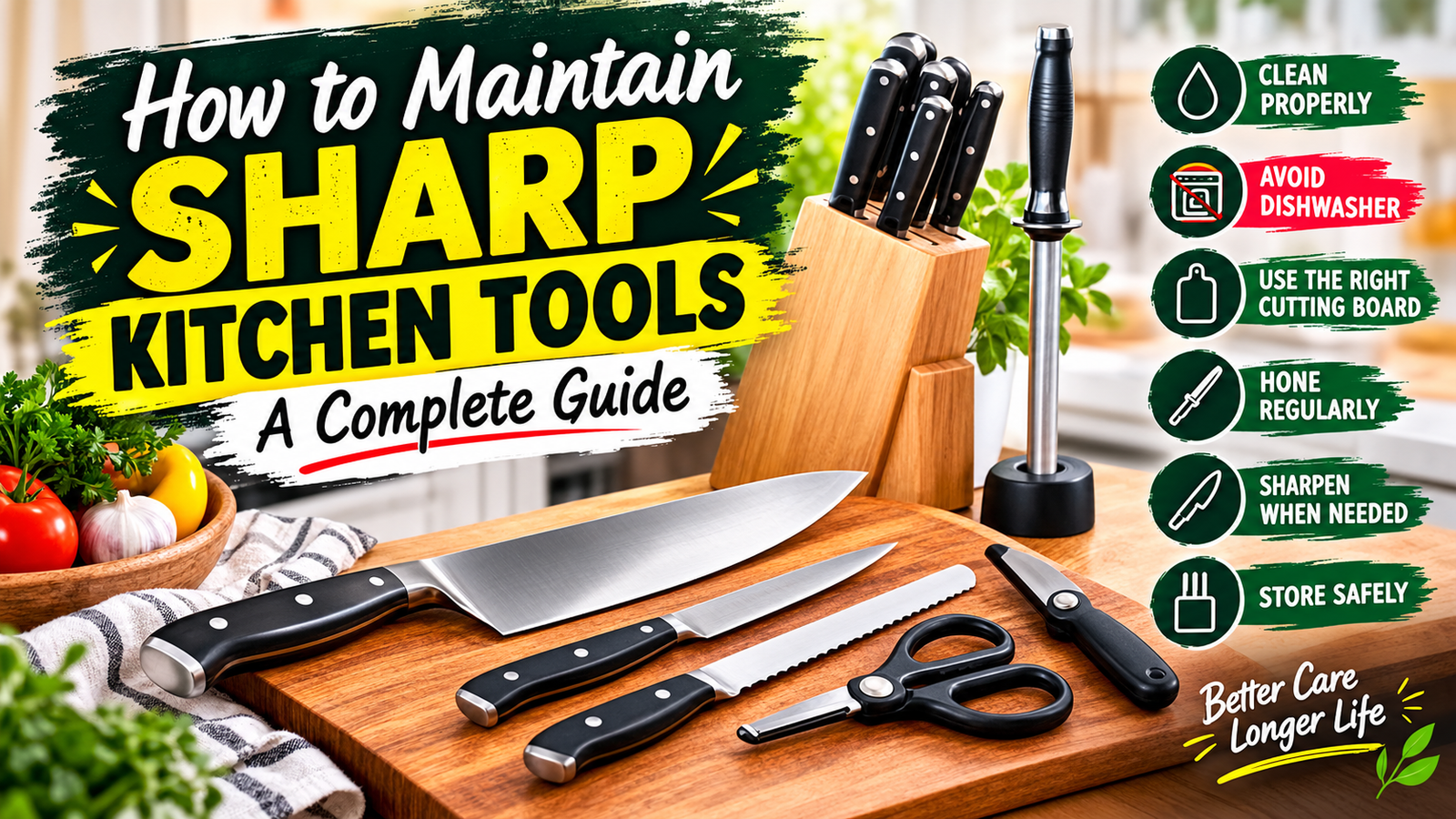
How to Maintain Sharp Kitchen Tools: A Complete Guide
Sharp kitchen tools are essential for safe, efficient, and enjoyable cooking. Whether you use chef’s knives, paring knives, kitchen shears, peelers, or other cutting tools, proper maintenance can keep them sharp and extend their lifespan.
A dull knife often requires more pressure, making cutting slower and potentially less safe. The good news is that maintaining sharp kitchen tools doesn’t have to be difficult. With the right cleaning, storage, sharpening, and handling habits, you can keep your favorite kitchen tools performing at their best.
In this guide, we’ll explain how to maintain sharp kitchen tools, how often to sharpen them, common mistakes to avoid, and practical tips for keeping your blades in excellent condition.
Why Is It Important to Keep Kitchen Tools Sharp?
Sharp kitchen tools provide several advantages:
- Make cutting easier and faster
- Provide cleaner and more precise cuts
- Reduce the amount of force needed
- Help maintain control while cutting
- Make food preparation more efficient
- Extend the life of quality kitchen tools
A sharp knife can slice through vegetables, meat, herbs, and fruits with relatively little effort. A dull blade, on the other hand, can slip or crush food instead of cutting cleanly.
1. Clean Your Kitchen Tools Properly
One of the easiest ways to maintain sharp kitchen tools is to clean them correctly after every use.
Wash knives and other cutting tools with warm water and mild dish soap. Use a soft sponge or cloth to remove food particles and residue.
Avoid leaving sharp tools soaking in the sink for long periods. Prolonged exposure to water can encourage rust or corrosion, particularly on carbon-steel blades.
Important Tip
Dry your kitchen tools immediately after washing them. Don’t leave them wet on the counter or inside a dish rack for extended periods.
2. Avoid Putting Quality Knives in the Dishwasher
Although some kitchen knives are labeled dishwasher-safe, hand washing is generally a better choice for maintaining a sharp blade.
During a dishwasher cycle, knives can:
- Hit other utensils
- Rub against hard surfaces
- Experience high temperatures
- Become exposed to strong detergents
- Develop corrosion over time
These factors can damage the cutting edge and shorten the life of your knife.
For expensive or high-quality kitchen knives, hand washing and immediate drying are usually the safest approach.
3. Use the Right Cutting Board
Your cutting board can have a major effect on how long a knife stays sharp.
Hard surfaces such as glass, stone, ceramic, and some very hard plastics can be harsh on knife edges. Instead, consider using a quality wooden or suitable soft cutting board.
A good cutting board provides enough resistance for food preparation without unnecessarily damaging the blade.
Avoid Cutting Directly on:
- Glass countertops
- Marble surfaces
- Granite countertops
- Ceramic plates
- Metal surfaces
These surfaces can quickly damage a knife’s cutting edge.
4. Use a Honing Rod Regularly
A honing rod is useful for maintaining the edge of a knife between sharpening sessions.
Honing does not usually remove significant amounts of metal. Instead, it helps realign the knife’s edge when it becomes slightly misaligned through normal use.
For people who cook frequently, gentle honing can help maintain cutting performance.
How to Use a Honing Rod
- Hold the honing rod securely.
- Position the knife at a consistent angle.
- Gently draw the blade along the rod.
- Repeat on both sides of the blade.
- Avoid using excessive pressure.
The exact angle depends on the knife, so follow the manufacturer’s recommendations when available.
5. Sharpen Your Knives When Necessary
Honing and sharpening are not the same thing.
Honing helps maintain an existing edge, while sharpening actually removes a small amount of metal to create a new cutting edge.
If your knife remains dull even after honing, it may be time to sharpen it.
Common sharpening methods include:
- Whetstones
- Manual pull-through sharpeners
- Electric sharpeners
- Professional knife sharpening services
For high-quality knives, learning to use a whetstone properly or using a professional sharpening service can be a good option.
6. Store Knives Safely
Proper storage is another important part of maintaining sharp kitchen tools.
Simply throwing knives into a kitchen drawer can cause their blades to hit other utensils. This can lead to small chips, scratches, and dull edges.
Better storage options include:
Knife Block
A traditional knife block keeps blades separated and protected.
Magnetic Knife Strip
A magnetic strip can save counter space and keep knives easily accessible. Make sure the strip securely holds the knife and that the blade does not repeatedly scrape against the surface.
Blade Guards
Blade guards are useful if you prefer storing knives inside a drawer. They protect the edge and reduce contact with other utensils.
7. Don’t Use Kitchen Knives for the Wrong Tasks
A kitchen knife should be used for the job it was designed to perform.
Avoid using your chef’s knife as a:
- Screwdriver
- Can opener
- Pry tool
- Bone cleaver
- Frozen-food cutter
Using a knife for tasks outside its intended purpose can damage or chip the blade.
If you need to cut through bones or other tough materials, use a tool specifically designed for that job.
8. Cut Food Using Proper Technique
Your cutting technique can also affect the condition of your kitchen tools.
Avoid aggressively scraping food across the cutting board with the sharp edge of your knife. Instead, turn the knife over and use the spine when appropriate for moving chopped ingredients.
Use controlled cutting movements rather than forcing the blade through food.
Proper technique not only protects your knife but also gives you better control during food preparation.
9. Keep Kitchen Shears Sharp
Knives aren’t the only kitchen tools that need maintenance. Kitchen shears can also become dull over time.
Use kitchen scissors only for appropriate tasks such as:
- Cutting herbs
- Opening food packaging
- Trimming poultry
- Cutting kitchen twine
Clean and dry them after use. If the blades become dull, check whether the model can be sharpened or separated for maintenance.
Avoid using kitchen shears to cut materials they weren’t designed for.
10. Maintain Vegetable Peelers
A dull vegetable peeler can make food preparation frustrating.
To maintain your peeler:
- Wash it after each use
- Remove food residue
- Dry it properly
- Store it where the blade won’t hit other utensils
- Replace the blade or peeler when it becomes excessively dull
If a peeler requires excessive pressure to remove vegetable skin, it’s often a sign that the blade needs attention or replacement.
11. Prevent Rust and Corrosion
Moisture is one of the biggest enemies of many metal kitchen tools.
To help prevent rust:
- Dry tools immediately after washing
- Don’t leave them submerged in water
- Store them in a dry location
- Remove food residue promptly
- Follow the manufacturer’s care instructions
If you notice small areas of surface rust, address them early rather than allowing corrosion to spread.
12. Don’t Over-Sharpen Your Kitchen Knives
Sharpening is useful, but doing it unnecessarily can remove metal from the blade faster than needed.
Instead of sharpening every time the knife feels slightly less sharp, use appropriate maintenance techniques between sharpening sessions.
A practical routine is:
Use → Wash → Dry → Store → Hone when needed → Sharpen when genuinely dull
The exact sharpening frequency depends on how often you cook, the knife material, cutting surface, and type of food you prepare.
13. Use Separate Tools for Different Jobs
Using the correct tool for each task can help preserve sharp edges.
For example:
- Chef’s knife → general food preparation
- Paring knife → small fruits and vegetables
- Bread knife → bread and soft baked goods
- Boning knife → separating meat from bones
- Kitchen shears → herbs, packaging, and suitable cutting tasks
Using specialized tools reduces unnecessary stress on your primary kitchen knife.
14. Don’t Store Dirty Knives
Food acids, moisture, and salt can affect certain blade materials.
Ingredients such as tomatoes, citrus fruits, onions, and salty foods can leave residues on blades. Clean your knife soon after use rather than allowing food residue to dry onto the surface.
This simple habit can help keep the blade cleaner and reduce corrosion.
15. Know When a Knife Needs Professional Sharpening
Some knives require more specialized care.
Consider professional sharpening if:
- The blade has significant chips
- The knife is badly damaged
- The edge is uneven
- You aren’t comfortable using a sharpening stone
- The knife is expensive or professionally made
A professional can restore the edge while reducing the risk of accidentally damaging the blade.
Common Mistakes That Make Kitchen Tools Dull
Even a high-quality knife can become dull quickly if it isn’t maintained properly.
Avoid these common mistakes:
❌ Cutting on glass or stone
Hard surfaces can damage the cutting edge.
❌ Throwing knives into a drawer
Blades can hit other utensils and become damaged.
❌ Leaving knives wet
Moisture can contribute to rust and corrosion.
❌ Using knives as tools
Prying, opening cans, or cutting hard materials can damage the blade.
❌ Using too much force
A properly maintained knife should generally cut food without excessive pressure.
❌ Sharpening incorrectly
Incorrect sharpening angles or excessive pressure can damage the edge.
How Often Should You Sharpen Kitchen Knives?
There isn’t one universal sharpening schedule.
A home cook who uses a knife occasionally may need sharpening only a few times a year, while someone who cooks every day may need it more frequently.
Instead of following a strict calendar, pay attention to performance.
Your knife may need sharpening if:
- It struggles to cut tomatoes
- It crushes instead of slicing food
- You need noticeably more pressure
- Cuts become uneven
- Honing no longer improves performance
Simple Kitchen Tool Maintenance Routine
Maintaining sharp kitchen tools can become part of your normal cooking routine.
After Every Use
Wash → Rinse → Dry → Store safely
Regularly
Inspect → Hone when needed → Clean storage area
When Performance Drops
Sharpen or professionally service the tool
This simple routine can help keep your kitchen tools reliable for years.
Final Thoughts
Learning how to maintain sharp kitchen tools doesn’t require complicated equipment or expensive products. Good cleaning habits, proper cutting surfaces, safe storage, regular honing, and occasional sharpening can make a significant difference.
Most importantly, always use each kitchen tool for its intended purpose. Protecting the cutting edge from hard surfaces, moisture, improper storage, and excessive force will help your knives, shears, peelers, and other cutting tools stay effective for longer.
A well-maintained kitchen tool isn’t just easier to use—it can also make everyday food preparation faster, cleaner, and more enjoyable.