How to Integrate Technology With Traditional Farming: A Complete Guide
Agriculture has always depended on knowledge passed down through generations. Traditional farming practices such as crop rotation, natural soil management, local seed selection, and careful observation of weather and crops remain valuable today. However, modern technology can make these practices more efficient, productive, and sustainable.
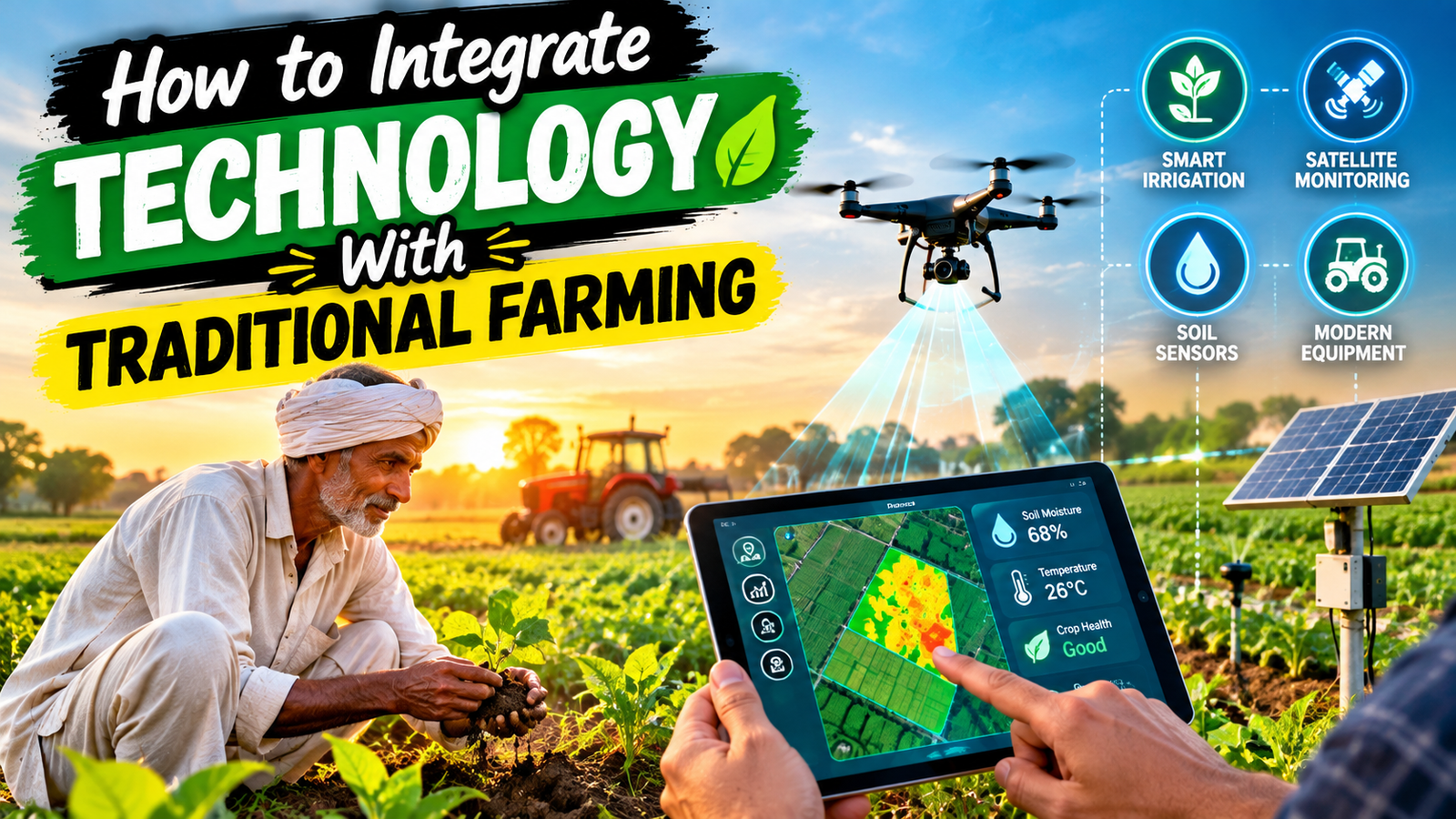
Integrating technology with traditional farming does not mean replacing farmers or abandoning traditional methods. Instead, it means combining farmers’ practical experience with modern tools to make better decisions, reduce waste, and improve farm productivity.
In this guide, we explore practical ways farmers can bring technology into traditional farming while preserving the methods that have worked for generations.
What Does Technology Integration in Farming Mean?
Technology integration in farming means using modern tools, equipment, software, and data alongside traditional agricultural knowledge.
For example, a farmer can continue using traditional crop rotation while using a mobile application to monitor weather conditions and soil moisture.
Similarly, traditional knowledge about the best planting season can be combined with weather forecasting technology to make more informed decisions.
The goal is simple: use technology where it adds value while keeping useful traditional farming practices.
1. Use Smartphones and Mobile Apps
One of the easiest ways to introduce technology into traditional farming is through smartphones.
Farmers can use mobile apps to access information about:
- Weather forecasts
- Crop prices
- Pest identification
- Irrigation schedules
- Fertilizer information
- Farm management
- Agricultural news
- Market opportunities
A smartphone can become a practical farming assistant, especially when farmers need quick access to information.
Example
A farmer who traditionally relies on seasonal experience can also check upcoming weather conditions before deciding when to plant, irrigate, or harvest.
2. Combine Traditional Knowledge With Weather Technology
Traditional farmers often have extensive knowledge about local weather patterns. Modern weather technology can complement this experience.
Weather forecasting tools can provide information about:
- Rainfall
- Temperature
- Humidity
- Wind
- Heat conditions
- Potential extreme weather
Farmers can use this information alongside their local observations.
For example, instead of irrigating according to a fixed schedule, farmers can consider recent rainfall and upcoming weather conditions before applying water.
This can help reduce unnecessary water use.
3. Introduce Soil Monitoring
Traditional farmers often determine soil conditions by observing crops and physically examining the soil. This knowledge remains useful, but technology can provide additional information.
Modern soil sensors and testing tools can measure factors such as:
- Soil moisture
- pH
- Temperature
- Nutrient levels
- Electrical conductivity
Farmers can use these measurements to understand where their fields need attention.
Traditional + Technology Approach
A farmer might combine traditional knowledge of a field’s productive areas with soil test results to determine where amendments or irrigation are actually needed.
4. Use Smart Irrigation Systems
Water management is one of the most important areas where technology can complement traditional farming.
Traditional irrigation methods can be improved with:
- Soil moisture sensors
- Automated irrigation systems
- Drip irrigation
- Timers
- Weather-based irrigation controls
Instead of watering the entire field equally, technology can help identify areas that need more or less water.
This approach can potentially reduce water waste while maintaining appropriate moisture levels for crops.
5. Use Drones for Crop Monitoring
Drones are becoming increasingly useful in modern agriculture.
A drone equipped with a suitable camera can provide an aerial view of farmland and help identify areas that may require attention.
Farmers can use aerial imagery to monitor:
- Crop growth
- Irrigation problems
- Pest or disease symptoms
- Damaged areas
- Uneven crop development
- Field conditions
Traditional farmers already inspect their fields by walking through them. Drone imagery can provide another perspective without replacing physical inspection.
6. Adopt Precision Agriculture Techniques
Precision agriculture uses data and technology to manage different parts of a farm according to their specific needs.
Instead of treating an entire field exactly the same, farmers can use information about soil, crops, water, and nutrients to make more targeted decisions.
For example, technology can help determine where fertilizer or irrigation may be needed.
This can support efficient use of farm inputs and potentially reduce unnecessary costs.
7. Use GPS and Digital Mapping
GPS technology can help farmers map their land and organize field operations more efficiently.
Digital maps can be used to identify:
- Field boundaries
- Crop areas
- Irrigation routes
- Soil variations
- Planting zones
- Farm roads
This can be especially useful for larger farms, but even smaller farms can benefit from basic digital mapping.
8. Improve Pest and Disease Detection
Traditional farmers often identify pests and plant diseases through experience and visual inspection.
Technology can provide an additional layer of support.
Mobile applications and image-based tools can help farmers recognize potential crop problems by analyzing photographs of affected leaves, stems, or fruits.
However, technology should not automatically replace professional agricultural advice. When the diagnosis is uncertain or the problem is severe, farmers should consult an agricultural expert.
9. Use Digital Marketplaces
Technology can also help farmers connect with buyers.
Digital marketplaces and agricultural platforms may allow farmers to:
- Compare market prices
- Find potential buyers
- Promote their produce
- Track orders
- Learn about demand
- Reduce dependence on some intermediaries
This can complement traditional local markets rather than completely replacing them.
A farmer can continue selling locally while also exploring digital sales channels.
10. Introduce Farm Management Software
Keeping farming records on paper is a traditional practice that can be upgraded with digital tools.
Farm management software can help record:
- Seed purchases
- Fertilizer usage
- Irrigation
- Labor costs
- Crop yields
- Equipment maintenance
- Sales
- Expenses
Having organized digital records can make it easier for farmers to understand which crops and practices are producing good results.
11. Use Renewable Energy Technologies
Technology can also support more sustainable farming.
Depending on local conditions, farmers may consider technologies such as:
- Solar-powered water pumps
- Solar lighting
- Renewable-energy irrigation systems
- Energy-efficient farm equipment
For farms with suitable solar conditions, solar-powered systems can be particularly useful for irrigation and other basic electrical needs.
12. Use Technology to Preserve Traditional Farming Knowledge
Technology isn’t only about modern machinery. It can also help preserve traditional agricultural knowledge.
Farmers can digitally record:
- Local planting practices
- Traditional crop varieties
- Seed-saving techniques
- Seasonal observations
- Indigenous farming methods
- Historical crop yields
This information can be stored digitally and shared with younger generations.
In this way, technology can help protect valuable agricultural knowledge rather than allowing it to disappear.
Benefits of Combining Technology With Traditional Farming
When implemented appropriately, technology can provide several potential benefits.
Better Decision-Making
Data from weather stations, sensors, and farm records can provide additional information to support farmers’ existing knowledge.
Reduced Resource Waste
Precision irrigation and targeted application of inputs can help reduce unnecessary use of water, fertilizer, and other resources.
Improved Farm Monitoring
Digital tools can help farmers monitor larger areas more efficiently.
Better Record Keeping
Digital records make it easier to track expenses, crop performance, and farm activities.
Access to Information
Farmers can access agricultural education, weather information, market prices, and expert resources through digital platforms.
Preservation of Traditional Knowledge
Digital records can help preserve local farming techniques and knowledge for future generations.
Challenges of Using Technology in Traditional Farming
Technology can provide valuable benefits, but adoption also comes with challenges.
Cost
Advanced equipment such as drones, sensors, and automated machinery can be expensive.
Digital Skills
Farmers may need training to use unfamiliar applications, devices, and software.
Internet Access
Some digital farming tools depend on reliable internet or mobile connectivity, which may not be available everywhere.
Maintenance
Electronic equipment requires maintenance, technical support, and sometimes replacement parts.
Data Privacy
Farmers should understand how agricultural data is collected, stored, and shared by digital platforms.
For these reasons, technology adoption should be practical and suited to the farm’s size, budget, and needs.
How Small Farmers Can Start
Farmers don’t need to purchase expensive equipment immediately. A gradual approach can be more practical.
Step 1: Start With a Smartphone
Use reliable agricultural apps for weather, crop information, and market research.
Step 2: Keep Digital Records
Record expenses, planting dates, irrigation, fertilizer applications, and harvest results.
Step 3: Test Soil
Use affordable soil testing services or basic monitoring tools before investing in advanced technology.
Step 4: Improve Irrigation
Consider efficient irrigation methods and use soil moisture information where practical.
Step 5: Learn From Results
Compare crop performance before and after introducing a new technology.
Step 6: Expand Gradually
Once a technology demonstrates practical value, consider introducing additional tools.
The Future of Traditional Farming and Technology
The future of agriculture does not necessarily require choosing between traditional farming and modern technology.
A more practical approach is to combine the strengths of both.
Traditional farmers bring valuable knowledge about their land, crops, seasons, and local conditions. Technology can provide additional data, automation, communication, and monitoring capabilities.
For example, traditional crop rotation + digital farm records, local weather knowledge + weather forecasting, and traditional field inspection + drone imagery can work together.
The result is a farming approach that respects agricultural experience while taking advantage of modern innovation.
Final Thoughts
Integrating technology with traditional farming is about finding the right balance. Farmers don’t need to abandon generations of agricultural knowledge to benefit from modern technology.
Smartphones, soil testing, weather forecasting, precision irrigation, drones, GPS mapping, digital marketplaces, and farm management software can complement traditional practices and help farmers make more informed decisions.
The most effective technology is not necessarily the most expensive. It is the technology that solves a real farming problem, fits the farmer’s budget and skills, and works alongside proven agricultural practices.
By combining traditional knowledge with practical technology, farmers can build more informed, efficient, and adaptable farming systems for the future.